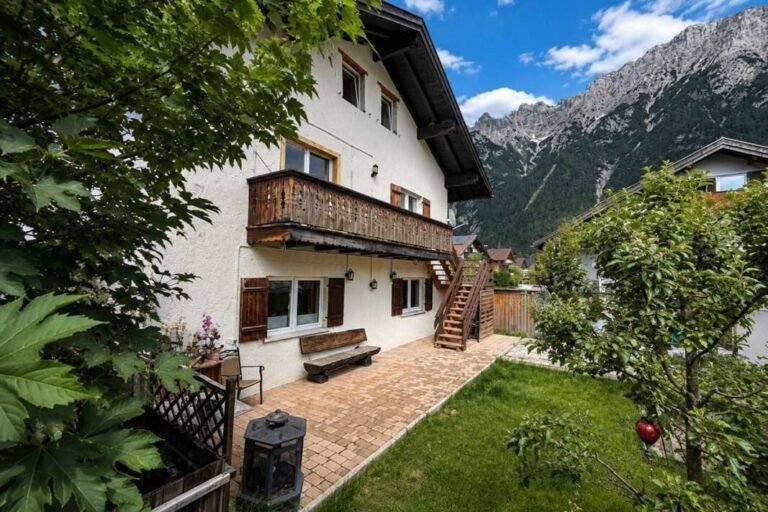
If you want to sell a tenanted house in Mittenwald, you are selling more than four walls with a tenancy agreement: the house comes with a garden, a driveway, heating, a roof and a whole range of obligations that are currently shared between you and your tenants and will rest with the buyer after the notary appointment. This guide is aimed at owners and heirs whose house in the Isar valley below the Karwendel is let to a family or to several households. It answers the questions that are different for a house than for a tenanted apartment: what does the house tenancy agreement say, what does the buyer have to take on with regard to the building, how do you deal with an older or listed house, and when is the right time to sell?
You will find the general principles, that is the transfer of the tenancy agreement, the deposit and the conversation with the tenant, set out in detail in the guide selling a tenanted property in Oberau. This article is about what a house brings with it in addition.
The key points at a glance
- With a tenanted house, the buyer takes over not only the tenancy agreement but also all the duties allocated in it, such as clearing snow, looking after the garden or servicing the heating. Check before the sale exactly what has been agreed.
- A garage, parking space or part of the garden is sometimes let under a separate agreement. Buyers need all the agreements, not just the main one.
- For detached and two-family houses, the Building Energy Act (Gebäudeenergiegesetz, GEG) imposes retrofitting obligations on the buyer when ownership changes. A current energy performance certificate (Energieausweis) and records on the heating and insulation answer this question early on.
- For older houses in the village centre, for example those with Lüftlmalerei (traditional painted façades), you should clarify before advertising whether the building is on the list of protected monuments. This noticeably changes the questions buyers ask.
- A fixed-term tenancy agreement or notice announced by the tenant can determine the timing of the sale. Read the term of the agreement carefully before deciding on the price.
- Buildings insurance generally passes to the buyer together with ownership. Heating oil in the tank, ancillary costs and rent are apportioned as of the cut-off date in the purchase contract.
- Clarify tax questions about the holding period and legal questions about the tenancy with a tax adviser, a notary or a specialist lawyer before you set a price.
How is your house in Mittenwald let?
Before you think about price and buyers, you should identify precisely how the house is let, because this decides which buyers will be interested in it. In Mittenwald and the neighbouring villages of Krün, Wallgau and Klais, owners mainly encounter three situations.
| Situation | Who is typically interested | The first question you should clarify |
|---|---|---|
| Whole house let to one household, often a family | Investors with a long-term view, relatives, sometimes the tenants themselves | How long does the family want to stay, and are they interested in buying? |
| Two-family house or house with a granny flat (Einliegerwohnung), one part let | Owner-occupiers who live in one unit and keep the other let | Is the second apartment approved under building law as a separate unit? |
| Multi-family house with several households | Investors, including from the greater Munich area | Is there a complete agreement, including statements, for every household? |
The whole house let to a family
This situation often arises when owners have moved away for work and wanted to keep the house, or when heirs initially let their parents’ home. Anyone buying a detached house usually wants to live in it themselves. The pool of investors for a single tenanted house is therefore limited. For you, this means: talk to your tenant family about their own plans at a very early stage. If they are planning to move anyway, your starting position changes completely.
The partly tenanted house
If you live in part of the house yourself and let the other part, you are selling a mixed arrangement. This can be attractive to buyers, because the rental income covers part of the running costs. At the same time, they will ask whether the granny flat is approved as a separate unit, whether there are separate meters and how access is arranged. For a house with only two apartments in which the landlord lives, tenancy law provides special rules on termination. Whether these apply to the buyer after a sale depends on whether they move in themselves. This question belongs in a conversation with a specialist tenancy lawyer, not in the property brochure (exposé).
The multi-family house
With several households, prospective buyers are mainly buying income and the condition of the building. They expect a tenant schedule showing the size of each apartment, the net rent, advance payments for ancillary costs, the start date of each agreement and the deposit, together with the statements from recent years. The more people live in the building, the more worthwhile a calm process with a few well-prepared viewings becomes.
What does the house tenancy agreement say, and what does the buyer take over from it?
Once entered in the land register (Grundbuch), the buyer steps into the tenancy agreement and thereby takes over every arrangement you have made with your tenants, including the small agreements on the garden, snow and repairs. With a house in particular, the agreement often contains duties that a property management company would handle for an apartment. So read your agreement once as if you were the buyer.
Snow clearing, garden and outdoor areas
Snow falls regularly in Mittenwald in winter, and footpaths, the driveway and the entrance have to be cleared. Check whether snow clearing has been transferred to the tenants in the tenancy agreement and exactly how this is worded. The same applies to the lawn, hedges, trees and the fence. If nothing has been agreed, these tasks lie with the owner, and the buyer has to organise them personally. For an investor who does not live locally, this is important information.
Repairs, servicing and cosmetic repairs
Many house tenancy agreements contain rules on minor repairs, servicing the heating or cosmetic repairs. Not every older clause is valid under current case law. As the seller, it is enough for you to disclose the clauses in full. Whether they hold up is for buyers and their advisers to judge.
Ancillary agreements and verbal arrangements
A garage, carport, parking space, workshop, woodshed or an additional piece of garden is sometimes let under a separate agreement and sometimes only agreed verbally. Collect everything that exists on this and summarise any verbal arrangements in a short note. Equally important are any commitments you have made to the tenant, for instance that they were allowed to run a sauna in the cellar or put up a garden shed. Anything the buyer does not know about will lead to disputes after the handover.
What is your tenanted house in Mittenwald worth?
Xenia Hirmer looks at the house, the tenancy agreement and the documents on site and explains the assessment to you point by point. You can then decide at your own pace and without obligation.
Knowing the condition of the house without disturbing the tenants
Buyers of a tenanted house want to know which investments they will face in the coming years, and you can only answer that if you know the condition yourself. With a house that has been occupied for years, owners often no longer have an accurate overview. A joint inspection with the tenants, announced in good time, brings clarity here.
The points buyers ask about most often
- Roof and gutters: age of the roof covering, last repair, condition of the snow guards. In areas with a lot of snow, buyers look very closely here.
- Heating: type, year of installation, last service and, for oil heating, the condition and inspection of the tank.
- Windows and front door: year of installation and type of glazing.
- Cellar and plinth: signs of damp, especially in houses on a slope or near streams.
- Wiring and pipework: condition of the electrics and water pipes, particularly in older houses.
- Timber components: balconies, wooden galleries and timber cladding exposed to the mountain weather.
Defects reported by the tenant
Go through your correspondence with the tenants. If the tenant has reported mould, a leak or faulty heating, this belongs in your documents, together with evidence of what you did about it. An unresolved defect that the buyer only learns about from the tenant after the purchase is one of the most common causes of trouble between the parties.
Building file and permits
Many houses in the Werdenfelser Land have been extended over decades: a converted loft, an additional apartment on the lower floor, an extension, a conservatory. Buyers ask whether these alterations were approved, especially if the converted space is let. Obtain the building file from the responsible building authority and compare the approved plans with the actual condition. Discrepancies are no reason to give up on the sale, but they must be known before you advertise.
Which obligations under the Building Energy Act will buyers face?
Anyone who buys a detached or two-family house must meet certain retrofitting obligations under the Building Energy Act within a set period after the change of ownership, and well-informed buyers ask about exactly this. For you as the seller, this means: the more precisely you document the energy side of the house, the less uncertainty remains for the buyer.
What buyers typically check
Above all, this includes the age and type of the boiler, the insulation of the ceiling below the roof space or of the roof itself, and the insulation of heating and hot water pipes in unheated rooms. Which obligations apply in an individual case, and which exemptions exist, depends on the building and on the current version of the law. An energy adviser can tell you and the buyer what specifically would need to be done.
The energy performance certificate
A valid energy performance certificate must be available for presentation at the viewing, and the key figures belong in the property advertisement. With a tenanted house, there is the additional point that a consumption-based certificate relies on the tenants’ consumption data. Check whether your certificate is still valid and which type of certificate is permitted for your house. To have one prepared, you need the consumption statements from recent years or details of the building fabric.
Records you should keep to hand
Invoices for a new heating system, insulated ceilings, new windows or a renewed roof are a convincing argument when selling. File them in an orderly way. The chimney sweep’s report also gives buyers information about the condition of the fireplaces and stoves.
Older houses in the village centre: Lüftlmalerei and listed status
If your tenanted house is in the historic centre of Mittenwald, you should check before the sale whether it is registered as a listed monument, because this affects what buyers are allowed to change on the building. Mittenwald is known for its painted façades, for example along the street Im Gries and around the Obermarkt. Not every painted house is a listed monument, and not every listed monument is recognisable as such at first glance.
How to clarify the status
You can check whether a building is on the Bavarian list of monuments (Denkmalliste) in the Bavarian Monument Atlas (Bayerischer Denkmal-Atlas), or ask the municipality and the lower monument protection authority (Untere Denkmalschutzbehörde) at the district office. Make a note of which parts are protected, such as the façade, the roof shape or interior features, and whether there are earlier permits for alterations.
What the status means for buyers
With a listed monument, alterations usually require permission under monument protection law. For an investor who wants to keep the house let, this is often less significant than for an owner-occupier who wants to remodel after the tenants move out. Some buyers particularly value the history of such a house. Others ask first about windows, heating and insulation, because modernisation of listed buildings has to be agreed with the authorities. The tax consequences of a listed building for the buyer are a matter for the buyer’s tax adviser. You should not make any statements about this in your property brochure.
Selling a tenanted house in Mittenwald: who buys?
Tenanted houses in Mittenwald are mainly bought by investors with a long-term perspective, family members and occasionally the tenants themselves. Owner-occupiers, on the other hand, are usually only interested if it is foreseeable when the house will become vacant.
Investors
Some investors come from the district of Garmisch-Partenkirchen and know the area. Others come from Munich or further afield and are looking for an investment in the mountains that is easy to reach via the railway line between Munich and Innsbruck. Investors who do not live locally ask particularly carefully about the duties in the tenancy agreement, because anyone who has not transferred snow clearing and the garden to the tenants needs a caretaker service.
The tenants themselves
A family that has lived in your house for years knows it better than any other prospective buyer. So ask early whether they would like to buy and whether financing is realistic. A sale to the tenants spares you viewings with strangers, but requires the same care over the price, documents and contract.
Finding the right time: tenancy term and notice
The best time to sell a tenanted house depends less on the calendar than on the status of the tenancy agreement, in other words on whether and when the house could become vacant. You should distinguish between three situations.
The tenant has given notice
If your tenant gives notice because they have built a house or are moving away, you can offer the house to owner-occupiers and investors alike once they have moved out. Use the notice period to prepare the documents, the energy performance certificate and the building file. Viewings before the tenant moves out should be agreed with them.
The agreement is for a fixed term
A tenancy agreement with a valid fixed term ends on the agreed date, provided the statutory requirements for the fixed term are met. Whether this is the case with your agreement should be checked by a specialist lawyer before you hold out the prospect of a handover date to prospective buyers.
The tenancy continues indefinitely
In that case, you sell the house with the tenant in place. A sale is not a ground for termination. A voluntary agreement with your tenant on moving out is possible; it should be recorded in writing and, if in doubt, checked by a lawyer.
Planning viewings in an occupied house
Viewings in a tenanted house go well if you involve your tenants early and keep the number of appointments small. Tenants generally have to allow viewings to a reasonable extent, provided they are given notice in good time.
A house involves more rooms than an apartment: buyers will also want to see the cellar, boiler room, loft, garage and garden. Agree with your tenants which areas will be accessible, and ask them to clear the boiler room and the loft for the appointment. Photos of occupied rooms are only taken with the tenants’ consent. Exterior shots and drone images show the location, the roof and the plot without intruding on the occupants’ privacy.
Prospective buyers should receive the property brochure, floor plans, a redacted copy of the tenancy agreement and the most important details on the condition before the appointment. Anyone who still wants to view after that is seriously interested.
What should the purchase contract for a tenanted house cover?
For a tenanted house, the purchase contract governs not only the price and handover, but above all how rent, deposit, ancillary costs, heating oil and insurance are divided between you and the buyer as of the cut-off date. The notary prepares the draft. So that all the points can be included, you should hand over the tenancy documents to the notary early.
Cut-off date for benefits and burdens
From an agreed date, the buyer is entitled to the rent and bears the running costs. Several weeks may still pass before registration in the land register. Agree how the tenants will be informed during this period and who pays what from when.
Deposit and statement of ancillary costs
The deposit passes to the buyer and should be handed over in a verifiable way. For the current accounting year, the contract specifies who draws up the statement for the tenant and how advance payments and costs are divided as of the cut-off date.
Heating oil, wood and pellets
Many houses in the region are heated with oil, wood or pellets. The stock in the tank or store on the handover date is an item that you and the buyer should agree clearly, as is the question of whether the tenants have already paid for it through the ancillary costs.
Buildings insurance
Under the German Insurance Contract Act (Versicherungsvertragsgesetz), residential buildings insurance generally passes to the buyer together with ownership, and both sides then have a right to terminate it. Inform your insurer about the sale and give the buyer the policy with the insured risks, such as storm, snow load or natural hazards.
Selling an inherited tenanted house in Mittenwald
Anyone who inherits a tenanted house becomes the landlord from the moment of succession and should first take on the ongoing obligations before deciding on a sale. Heirs who do not live in the region in particular underestimate how much responsibility an occupied house entails.
Let the tenants know who their contact person is now and where the rent should be paid. Clarify who can be reached in an emergency if the heating fails in winter or tiles are missing after a storm. Go through the deceased’s documents: tenancy agreement, proof of deposit, insurance policy, invoices from tradespeople and the chimney sweep. To sell, the heirs generally need proof of inheritance, such as a certificate of inheritance (Erbschein) or a notarial will with the record of its opening. If the house belongs to several heirs, they decide together.
The tenants often know the house better than the heirs by now. A conversation with them about its condition, repairs and their own plans is therefore a good first step. Heirs living far away do not have to travel for every viewing. Appointments, coordination with the tenants and dealings with the authorities can be organised locally while you make the decisions by phone, video call or email.
How Xenia Hirmer supports owners in Mittenwald
Xenia Hirmer supports the sale of your tenanted house in Mittenwald as your dedicated contact person from the initial meeting to the handover of the keys, and also coordinates appointments with your tenants. It begins with an on-site appointment, after which you receive a free assessment with reasons and decide without obligation whether and how to sell.
With tenanted houses, some of the team’s strengths come into their own:
- Within the team, Martin Hirmer deals with the authorities and permits. This helps when the building file, approved conversions or listed status need to be clarified.
- Through Berg Chalet GmbH, Xenia and Martin Hirmer have been planning chalet projects since 2018. This construction and project experience feeds into the assessment of the condition and the building fabric.
- The in-house marketing team produces photos, the property brochure, drone footage and films; occupied rooms are only photographed after agreement with your tenants.
- If you or your tenants do not want public advertisements, a discreet sale to registered prospective buyers is possible.
- With offices in Garmisch-Partenkirchen and Ehrwald, the team is at home on both sides of the border.
- For questions about tax, financing or the contract, the team puts you in touch with contacts from its network of notaries, tax advisers and financing advisers.
The page real estate agent in Mittenwald gives an overview of our work locally. If your house is in a neighbouring village in the upper Isar valley, you will find information under real estate agent in Krün. The article on the free property valuation in Garmisch-Partenkirchen, which is offered for houses in Mittenwald as well, explains how a reasoned on-site assessment works and which documents are helpful for it.
Planning a sale with tenants in Mittenwald
You get one dedicated contact person who coordinates viewings with your tenants and supports you up to the notary appointment, even if you live far away.
Frequently asked questions about a tenanted house in Mittenwald
Does my tenant have to agree if I sell the house?
No. You can sell your house without the tenant’s consent. The tenancy agreement remains in force, and the buyer steps in as the new landlord.
Who clears the snow after the sale?
That depends on the tenancy agreement. If snow clearing has been validly transferred to the tenants, that remains the case. Otherwise, the duty lies with the new owner. Disclose the relevant clause to buyers.
Does a separate agreement for the garage continue to apply too?
A tenancy agreement for a garage on the same plot generally passes to the buyer as well. Whether it can be terminated together with the residential tenancy agreement depends on how the agreements are drafted. Give the buyer all the agreements, including small ancillary ones.
Does the buyer have to replace the heating after the purchase?
That depends on the age and type of the heating and on the current Building Energy Act. Buyers of a detached or two-family house may be subject to retrofitting obligations with a deadline after the change of ownership. An energy adviser can tell you the specific position for your house.
My house has Lüftlmalerei. Does that automatically make it a listed building?
No. What counts is registration in the Bavarian list of monuments. You can check the status in the Bavarian Monument Atlas or with the lower monument protection authority.
May I enter the loft or cellar for viewings?
If these rooms are included in the tenancy, the same rules apply as for the living space: give notice in good time and agree on a date together. Rooms that are not let can be shown after agreeing on access.
How is the heating oil in the tank settled when the house is sold?
You set this out in the purchase contract. It is usual to establish the stock on the handover date and agree whether and how the buyer will pay for it. Take into account whether the tenants have already paid for the fuel through their advance payments.
Can I sell my tenanted house in Mittenwald if I live far away?
Yes. Viewings, coordination with the tenants and preparation of the notary appointment can be organised locally. For the notary appointment itself, there are solutions involving a power of attorney, depending on the case, which the notary will discuss with you.
What if my tenants want to buy the house themselves?
Then talk openly about the price, timetable and financing. A reasoned assessment creates a basis on which both sides can agree. The bank’s financing commitment should be in place before the notary appointment.
Selling a tenanted house in Mittenwald: your next steps
If you want to sell your tenanted house in Mittenwald, the best way to proceed is as follows:
- Read the tenancy agreement and all ancillary agreements as if you were the buyer, and make a note of the duties that have been transferred.
- Talk to your tenants about the planned sale and about their own plans.
- Put together the land register extract, floor plans, living area calculation, energy performance certificate and building file.
- For an older house in the village centre, check its listed status.
- Organise the invoices for the roof, heating, windows and façade, as well as the chimney sweep’s reports.
- Clarify the holding period and any loans with your tax adviser and your bank.
- Arrange an appointment for an on-site assessment.
You will find general information on how a house sale without tenants works in the guide selling a house in Garmisch-Partenkirchen. To arrange an initial conversation about your house in Mittenwald, please use the contact page on the website. You will usually receive a reply on the same or the next working day.